Saturday, August 11, 2012

Where Coffee Met Cool

Wearing sunglasses indoors DOES make you cool.
The coffee is irrelevant.

I work in a treatment clinic for teenage children. Our rule there is that, unless you are 18, you may have no coffee. If you are 17 and behave well… well, thanks for the cooperation, but you still get no coffee. My superiors are in general agreement with what seems like an almost heavenly decree: children do not get coffee.

The word “weird” falls beyond short of giving a description of my adolescent personality. For my sixth Christmas, my parents, in their fathomless wisdom, spoiled me as their beloved only child with a candy-apple-red Power Wheels Jeep. The only game I ever played in it was “Jurassic Park”, a game in which my freakishly tall best friend and I captured “dinosaurs” (plastic horseshoes) from Isla Nublar and pitted them against one another in Thunderdome-esque combat. I drove the Jeep because his knees couldn’t fit in the doors. Sometimes it really is surprising where children derive an air of superiority, mine being my lack of height in this case and the subsequent God-given ability to drive a toy Jeep. It could be totally possible that this was my first real taste at developing a sense of entitlement.

Entitlement, at least from the point of view of my already fractured long-term memory, is what first drove me to drinking coffee. To a young teen, nothing is manlier than coffee consumption. Alcohol was portrayed in school as cold, liquid delinquency in a bottle, and the words “drug use” could have been followed by an equal sign (=) and “baby murder” and still conveyed the exact same point that our counselors got across to us through more subtle means. But coffee was where the real masculinity was. There were no written laws against coffee consumption, nor were there true consequences for buying it. Kids just didn’t. “They” didn’t, “you” didn’t, “we” didn’t.

But I did. Eventually.

The word “cool” also doesn’t describe my childhood. Maybe “anti-cool” would do the trick. Definitely not cool. I approached coffee in the way that a first-time homeowner might approach purchasing a lawnmower: I have no attractive yard because I have no lawnmower, and therefore need a lawnmower to achieve maximum yardage. Coffee was my lawnmower, albeit in a sense of its perceived absolute need in order to find a doorway to “coolness”. Pokemon, band class, and Mystery Science Theater 3000 fulfilled the same roles as football, toilet humor, and girlfriends did for other malefolk my age. Society tends to favor the latter traits in rearing male children of merit (for some odd reason), and it took me a long time to notice that I lacked any sort of “valuable” social currency. Once I had, though, the feeling of inferiority slammed hard.

The killer app I needed was coffee. None of the sporty guys dared to touch it, for fear that they may taint the All-American path that their parents had put them on, nor did the wealthier and well-connected kids for fear of their parents withdrawing their privileged incentives in retribution for disobeying the all-encompassing Coffee Law. I, however, was under the impression that because I studied for school, played guitar, and worked hard at a real job that I needed (Nay! Deserved!) to be respected. So I purchased coffee.

Humankind may never fully understand why the tastebuds of those under 18 are different from those belonging to the over 18 crowd. All I know is that coffee tastes pretty crappy the first time one drinks it. For me even, it was pretty crappy the second time. But I persevered, and eventually I learned to adore the taste of coffee.

Black.
Flavored.
With chai (my personal favorite).
Pressed or drip.

I learned to enjoy it for what it really was: consumable art made by oftentimes quirky, weird, and, by Society’s standards, pretty uncool people with a passion for sharing the joy of coffee.

Nobody really cares about their peers’ drinking habits during adolescence. I’m glad our teenage years end, though. That’s when we tend to realize that our shoes are our shoes and that walking a mile or two in them makes us pretty cool. Or at least cool in a way that nobody else is cool. We tend to call that quirkiness. I dig quirkiness. Maybe you do, too.

I hope the teens under my care at work come to that same conclusion. Until then, I’ll continue to derive a sense of schadenfreude at their excuses for why they deserve coffee. I’ll keep saying no, because hey, children do not get coffee.

Be You.
Troy

Wednesday, April 11, 2012

Self vs. Identity


His Self is derived from his sunglasses...
Seems to be working.
George Herbert Mead revolutionized the way that individuals think of "selves." Plainly put, the Self is the persona that one portrays. The Self is complicated, as we cannot ourselves determine... well, our Selves. In developing a Self, Mead claims this rule as truth: You are not who you think you are, you are not who others think you are, you are instead who you think others think you are... If that was complicated, think of developing a Self instead as behaving dependently on how others have communicated their favor or disfavor with you.

We humans are constantly striving to define our identities. Finding identities requires a decent amount of introspection, and we find who we think we are through analyzing our weaknesses and strengths. When people present themselves to others, more likely than not, individuals choose to "put their best foot forward" and smile big for their daily social photo op.

My conflict is thus: What am I searching for? An Identity or a Self?

Erving Goffman (you'll remember his cold cynicism from several posts back) postulated that we have no single Self. Instead, Goffman believes that the Self can adapt and change depending on the social situation. In short, we act differently with different people, thus presenting a Self to strangers and superiors that is unlike the Self that our dearest friends and family know.

Identity (as far as I've seen) is instead our striving for what about us brings meaning and individuality to our lives. Identities are wrapped up not in rituals that make us more socially acceptable, but instead are formed by the qualities that make us unique. What's your Identity?

Are you an...
Artist?
Everyman?
Mother?
Athlete?
Christian?
Intellectual?
Something else entirely?

I believe that our deficiencies and weaknesses are just as important in forming our identities as our strengths and the things that we want to believe about ourselves are. Embracing where we struggle can bring more than just self-pity. In recognizing weakness, individuals can instead supplement a previous approach to life with a new drive for self-improvement. And, socially speaking, what more powerful tools are there to the search for meaning than love and selflessness? The Identity is what makes us Us and not a collection of scared individuals.

The Self is instead shallow. Constant striving to change and perfect a Self is the drive of most modern consumers such as myself. I want to be flawless and perfect in the eyes of others. I assume most of my associates and the general Western population is driven in the same way. This front is detrimental in developing me into a person who understands a meaningful life... or a life lived for the betterment of others. How can mankind continue to progress into a better state with Selves that are determined to serve their own interests above Humanity's? Or, for Christians, where is there room for the Kingdom of God if we are too busy developing our Selves into desirable socialites instead of bringing love to the poor, oppressed, depressed, and hurting?

As a Christian, I choose to give my identity to God and accept that His will is one full of love and strength through self-sacrifice, even when the pain of giving is tantamount to my social discomfort. I know many of my readers are nonbelievers as well, and so I ask both Christian and nonChristian alike to embrace their weaknesses. With acknowledgment of our downfalls comes a respect for others' lackings. Find your Identity not in who you want others to think you are, but instead in who you are in actuality. True friends/community will respect that. And remember that living to develop a perfected Self is not conducive to living a life of fulfillment. It is instead taking up precious resources that could otherwise be applied to changing the world for the better.

Choosing an Identity of caring,
Troy

Wednesday, March 21, 2012

Peace without coffee


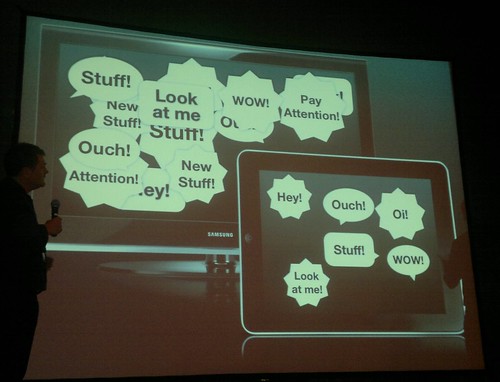
Now that's advertising!
My daily haunt is a little coffeehouse smack dab in the middle of my college town. The building is made to replicate the cafes of old, with giant brass espresso mechanisms, cracked bricks, old bicycles, and creaky wooden floors. Like most folks, the fragrant aromas of coffee and chai draw me from the “world outside,” in which I live life as a disheveled undergrad, to the world of “coffeehouse,” in which I am instantaneously at ease.

I think this is an atmosphere of peace. Everything, from the consciously chosen mood music, to the continual bombardment of herbal fragrances on our persons brings some semblance of calmness to each of our senses. It is all meant to produce a micro-environment of peace so as to draw our busyness out of life… and maybe turn a profit.

It’s funny how we as people can invent our own version of pseudo-peace. We crave this quiet environment now more than many other sources of sustenance. Life is loud, and our worries are urgent. To cloister ourselves in a giant coffee box from the constant upheavals life tends to throw at us is now a viable business model.

Peace is commercial. Peace is consumable. Peace is now “supply and demand.”

Don’t get me wrong, I love the social possibilities coffee joints offer to us as communal beings. A warm drink and a strong sense of comfort have been of utmost importance in many powerful interactions, revelations, and epitomes in this short, idealistic life of mine. I’m not attacking the coffeehouse industry itself, nor am I leveling anything at any individual shop. Instead, I feel it important to examine why I, and so many others, manufacture peace as a commodity.

There is no command more repetitive in Scripture than “do not fear.” In fact, those exact words are used nearly 365 times throughout both Testaments. For the Christ-inclined, life is meant to be in a constant state of anti-worry. Lack of restraint gives birth to life in its fullest, most meaningful form. Faith in God and trust in humanity save us from fear.

I’m sad that I forget this so often. I’m sad my consumptive, anesthetized culture draws me away from the satisfaction and contentment that is produced from living for others. And, most disappointing of all, I’m sad we settle for peace in consciously constructed environments.

Find peace in who you are, and in who God made you to be. It’s never bad to be active, but life isn’t about doing every single task in existence you can before you die. It is instead about doing the small things for others that build upon themselves until they crash into society as a giant wave of contagious love. There you will find peace everywhere you go. You no longer have to rely solely on a coffeehouse for your soul’s refreshment.

Stupefied at how much he spends on coffee,
Troy

Saturday, March 17, 2012

No Small Dreams


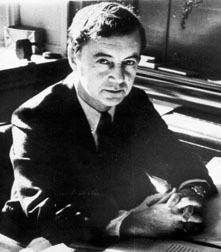
He dreamt big enough to write a book...
so that I might rip the photo off for my blog
Am I the only one who envies those select few who, no matter what the circumstances, always dream big? Or more simply, does anybody else envy the work ethic required to continuously strive for leaving this world a better place than when one enters it? This rare talent propels the world into meaning and beautiful stories. My dreams seem so sad and small when compared to those dreamers who refuse to cease dreaming.

I have a friend who dreams big. He possesses a plethora of V-necks and wears cardigans during the summer… definitely one hip dude. More striking than his wardrobe, however, is his desire to bring meaning to others in big ways, and, as a consequence, find meaning in his own life. He wants to open a coffeehouse in a community struggling with… well, community. He dreams of mentoring youths through corporate worship and informal teaching settings so as to raise up a loving Church. And, most powerful of all, he dreams of travelling to all the world’s countries with a camera to interview and document religious minorities. This guy dreams big. I can only imagine the process of a mind in constant search for ways to bring meaning to the lives of others. This dude is the real deal!

Johann Wolfgang von Goethe best illustrated the importance of dreams when he suggested all should “dream no small dreams, for they have no power to move the hearts of men.” Goethe understood how reaching the hearts and passions of those around him was of utmost importance, and that none can truly bring others into a place of passion and drive without a life-changing, terrifyingly risky dream. These dreams don’t bore us into the comfortable stupor that keeps the majority of us desensitized from the plights of others. Real change, according to Goethe, can only come about when we refuse to fear risk and dream big enough to cause excitement in others.

When we speak of dreams, we must realize that the dreams that bring true meaning are never fully realized. The profoundly enormous dreams are the ones that will be set into motion so as to last far beyond our own lives. When we dream big others will join in that dream, and passion for changing the world will grow exponentially. I pray that each of us grow into uninhibited dreamers who risk all for the betterment of those we can serve, and, in doing so, we live lives of complete fulfillment. May you never fear risk, nor allow society to numb you to the plight of the oppressed.

May your dreams be oases of life!
Troy

Friday, March 16, 2012

It's all about the "Me"

It's not all about you! It's all about Apple... right?
If reading this blog has left the reader confused as to how I see the world, I think clarification may be required to maximize understanding. I am comparative in nature. On some days, I see the potential good within the Church, yet am also quick to see the evil and the misguidedness of the modern faith in the very same context. Or what I should do, but, as is nearly always the case, what I actually do. "Hows" and "How-Nots" have long been my modus operandi in regards to expressing my world views. In pursuing this method for self-expression, I have developed two habits that may be categorized as both healthy and unhealthy.


1.) I like reading lists.
2.) I like compiling lists of my own.

Paul is one of the most profound list-makers of all time. The NT is littered with Paul's frank and explicit lists. Think fruits of the Spirit, armor of God, spiritual gifts, etc... What many are also quick to notice is how Paul is just as plain in listing the things that God hates. These lists tend to run the same rhythm from letter to letter and serve to communicate the stupid ways that Paul had seen many lead their lives. Practices like debauchery, drunkenness, sexual immorality, and idolatry were common practices in the Greco-Roman world (... or America) that Paul sought to inject faith and love into. I tend to communicate in lists like this as well (see nearly every last paragraph in nearly every post on this site). But I think, deep down, these lists hint at something that is ungodly:

I tend to write for attention, just as almost all of my actions seek attention.

Striving for community is not a bad thing. We were created for it! But one of Paul's common evils listed is "selfish ambition." Selfish ambition drives us in nearly everything we do (I can't speak for all of you, but I CAN speak for many). Lists are used to compare the things we see and do, and so I use lists to compare my thoughts or beliefs to others' viewpoints. But over time, this has devolved in my life to the point where now I compare myself to other people constantly. Ambition drives me to be above, better, far more "awesome" than those around me... and that is a terrible way to walk.

To combat selfish ambition, one needs to hear Paul speak of freedom in Galatians 5: "1 It is for freedom that Christ has set us free. Stand firm, then, and do not let yourselves be burdened again by a yoke of slavery." and "13 You, my brothers, were called to be free. But do not use your freedom to indulge the sinful nature; rather, serve one another in love." Selfish desires for attention, sugar coated as "selfish ambition," is a yoke that serves to blind us from serving others. We are called to love, which requires empathy. The development of empathy can only come from serving others (especially when we would rather do anything else). 


Paul knows that Jesus came to liberate through servitude via love. If we want to live (and love) as Jesus did, we need to learn to serve others in everything. In doing so, we will live life to the fullest in genuine community, and our selfish ambitions will become instead the realizations of something meaningful. No longer will we compare ourselves with others for our own sense of self identity. Instead, our Christ-like walk will lead us into the identities we were truly meant to own. 


I leave you with Paul:


"2 Carry each other’s burdens, and in this way you will fulfill the law of Christ. 3 If anyone thinks he is something when he is nothing, he deceives himself. 4 Each one should test his own actions. Then he can take pride in himself, without comparing himself to somebody else, 5 for each one should carry his own load." - Galatians 6:2-5


Would love to hear your freedom stories!
Troy

Monday, November 14, 2011

Wall Street's got nothin' on me...

It has... coins for organs?
Does anybody else out there have a guilty pleasure blog? You know, that one piece of perpetually updated internet writing that shouldn't be enjoyable, but it claws at your brain without your permission? Huffington Post's blog section is like that for me. I enjoy the news they offer, yes, but I've always held the belief that commentary and opinion on a news site should be avoided in general. But on HuffPo... well, maybe I can fudge a little bit on my conviction.

I read an article today by Leo W. Gerard entitled "Crash Tax: Wall Street Reparations." Mr. Gerard is the president of United Steelworkers, a sizable entity in the manufacturing sector. In his article, Mr. Gerard argues for a tax on financial transactions by businesses so as to mitigate the lack of fair tax structure when it comes to taxing large financial institutions. His point, of course, being that Wall Street is guilty for the financial instability that we find ourselves in currently. As the neo-communitarian hippie in the room, normally I'd agree with this sort of sentiment (FIGHT THE NAZI-FASCIST-TOTAL-LAMEWADS!). But for some reason, this particular article caused me to approach the financial bubble crisis in a different light.

I don't blame Wall Street. I don't blame Congress. I don't blame President Obama. I blame me. And I blame my friends. And I blame the majority of the American citizenry.

70% of the American economic structure is consumer-based. That means that the majority of all the money that flows into the monetary system is spent in the consumption of... well, for the most part, it's crap. Think about any effective advertising campaign. "Buy our product" doesn't sell goods. "Buy our product so that your family/sex life is pristine, you look cooler than your neighbor, and it goes fast" seems to be a more readily acceptable marketing gimmick.

The "American Dream," simply stated, is a house, a nice car, and a better collection of doohickery than one's own neighbor. Honor seems to be a main goal, or at least some degree of social recognition. With wage decreases being a constant in America since the 60s, Americans have had to find a new way to maintain their status. If wages can no longer support the consumptive behaviors necessary to maintain the "American Dream," then we turn to borrowing money. The banks are our friends! However, when it all doesn't go according to plan and we rack up massive amounts of debt, then the loaner becomes the evilest of evil.

Oh, sure there was predatory lending throughout the late 90s and early 2000s. And there was a lack of regulation within the financial sector as it rapidly sold the lives and well-being of millions of citizens in the forms of CDOs and unstable assets. And yes, the CEOs of these companies took home huge bonuses whilst they torched the totality of the American economy. But I don't blame them. Who wouldn't grow greedy with that sort of access to easy money? No, I blame the emotionally-driven consumptive mindset of the American citizenry.

Why do you want money? Is it to buy a new car? Or a new coat? I'm not judging, don't get me wrong. I'm just as guilty! But at the same time, I pray that we all become aware of our own mindset when purchasing things. Be aware of the fact that consuming just to look good or be better than others is rampant in our society as a whole. We are driven by emotions and the want to be worth something in others' eyes. Pandering to that is good advertising. I urge you to examine your purchasing patterns and be aware of the consequences of a country of over 300 million people buying products to feel better about themselves.

Part 2 to come,
Troy

Monday, November 7, 2011

Why it's worth stopping the act

It's Heaven... twice!
So... the Goffman post was a bit of a change of pace. I acknowledge that not all of my readers are quite as fascinated with cold, cynical sociologists as I am. Who wouldn't draw all sorts of interest from moral functionalist social theory? Ridiculous! But there WAS actually a point in posting it.

I can't help but think about my interactions with others. Sometimes being completely genuine is difficult because the totality of myself seems dreadfully boring. We each have personal reputations to maintain. Or to build. Or to hope to embody someday. And there's more to our social wants than just a reputation. We want to be loved dearly by others, to know that we are of worth in others' eyes.

To be called for coffee. That's what we want at our deepest level. Maybe not coffee, but to be called for something. It's nice to call others, of course, because any opportunity to share in a friend's company is a beautiful thing. But sometimes a person gets fed up with calling. Maybe he/she wants to be called and thought of. All of us share a desire to be worth another person's thought. That is the deepest need that God has instilled within each and every one of us as communal beings.

So I act. I wear a facade worthy of Shakespearian recognition so as to impress others, using demeanor rituals (BAM! Score one for Goffman!) to try to show how worthy I am of attention. If I am in a crowd of fellow outdoorsmen/women, I loudly proclaim my achievements and latest pieces of outdoor finery/junk. Or in the presence of musicians, you'd think I was a Grammy winner, with my ceaseless boasting and putting down of others' music. But there is one thing that I am learning, with a large degree of difficulty: Trying to show my own worthiness does nothing for my desire for the love of others.

It's in the other type of ritual Goffman postulated, the deference ritual, that we come to satisfy the need for others' respect and care. To review, deference rituals are acts in which we exhibit our respect (or lack thereof) for another person. In respecting others, in loving others, in being willing to sacrifice without expectation of payment, that is where we find the environment in which we can drop the act. If you want others to include you, call them first. And keep doing it. In giving your time, ear, and love to others, you will in turn be loved, even if it takes a long time to feel the results.

I can't say I've mastered this. In reality, I struggle to remember this in my daily interactions. In fact, I am in a near 100% state of not remembering it every single day. And so I pass on to you the opportunity to think about your own personal interactions. Take a peek at my post on Goffman. If reading this post first helps you make sense of it, then feel free to utilize it. But it is worth questioning and praying about how we treat others. "Do unto others as you would have them do unto you," is a sequential process: If you want the love of others, do unto them first. The rest will take care of itself.

Turning a cynic into a "rock on, man!"
Troy

Wednesday, November 2, 2011

Society is a REALLY huge play

Goffman is not amused...
I've been up to some fascinating research lately on morality, ritual, and socialization in religion. One of my favorite sociologists, Erving Goffman, has some remarkably original insights into behavior and how different people are taught to react to situations. I would kind of dig sharing some of that with you so that each of you can maybe approach situations with new mindsets.

To Goffman, mankind is in a constant state of performance. This idea, called the Dramaturgical Analogy, presents people in a new light, namely to portray them in the guise of an actor. A good actor must be flexible (like Sean Connery or William Shatner... right?) to ever succeed in the world of acting. Goffman sees all people, or at least the ones who are socially competent, as multifaceted actors. Imagine! How would people react if you treated complete strangers as you do your spouse? Creepy, right? That, according to Goffman, is one of many reasons that each person needs multiple versions of themselves that they portray to others.

So then are we individuals, with a core concept of who we are? Are people truly independent and different from each other? According to Goffman, we crave social acceptance more than anything else. To gain acceptance, we become as actors and fulfill multiple roles. All actors are each made up of "selves," or instantly accessible personalities. Why plural? Because Goffman sees people as constantly changing these selves, depending on situations. Previous experience with a situation, mass media, or family tell us how to deal with a given scenario, and thus we have multiple reaction indoctrinated into us from multiple sources. When something happens, with lightning speed, we react in a way that is familiar to us. By doing this, we manipulate the outcome of an event. An example would be if a total stranger bumped into you on the street and proceeded to blast a juicy loogie all over your face. Gross! But why is it gross? Simply put, because we've been told, through other people or media, that loogies are gross! So your response, of utter disgust, is a self that has been developed out of previous examples as portrayed in mass media or culture.

In purposefully trying to manipulate a situation to our benefit, we create a new self that is separate from the self that we use elsewhere. When we have to purposefully maintain a self, we are (to use another stage analogy) in the Front. The Front are the environments that we get ourselves into that require us to maintain a self that is separate from the self in the Backstage, or environment where we are most comfortable, such as at home. Because culture as a whole teaches most people the same way to react to most situations, responses go from being completely instinctual to purposeful, structured ritual. Society is basically a fancy word for ritualized responses to events in which we are in constant process of creating and changing between multiple selves in the Front.

The two kinds of ritualized social interaction that we contribute to are demeanor rituals and deference rituals. Demeanor rituals are the things we do to show others that we are worthy of their attention or respect. Deference rituals are the ways in which we show our respect (or lack thereof) for another person. By mastering a balance between these two types of ritualized interactions, one can effectively master one's social environment. The socialization, or influence of our upbringing and past experiences,  of how we behave in the Front are a direct influence on the level of demeanor and deference that we show to others in a social situation. Therefore, we can see that most socially acceptable people are those that have taken the programmed responses that they have become familiar with and have learned to apply those in proper amounts of demeanor and deference behaviors with other people.

This fascinates me to no end! So if this isn't your bag, sorry about that. But I do urge you to start looking at your interactions with honesty. Are we always acting? Is there really an "I" when I think of myself? It's interesting introspection, for sure. I, for one, kind of dig the idea of not being completely socially acceptable :) Christ kind of turns that on its head. Maybe I'm just crazy!

Eluding cynicism... barely,
Troy

Wednesday, October 26, 2011

A life well lived

"Hey, look! A hole! Let's jump in it!"
How one's response should always be
in the presence of a gaping chasm.
Just about everything I've ever needed in my life has fallen in to my lap. When I wanted a job, one would show up within my community of acquaintances. Or I'd stumble into a place in a suit and be rewarded with employment. Should I want a new instrument, one just happens to be going for the right price somewhere nearby (unless it has the word "Fender" attached to it). Cars, activities, food, and housing situations (just to name a few) have seemingly been effortless issues for me.

I am lucky. I am blessed.

I have fairly recently become well acquainted with a few fellow college students who weren't born with this "luck gene" (or, to put it bluntly, without a surplus of money). It is somewhat shocking to learn that every person in the world doesn't have a background in privilege. These students have been hungry, tired, penniless, without transportation, and without employment opportunities. Difficulties have been the norm for them.

And yet they are joyful. They spew joy like a limitless reservoir during flood season. And I envy that from time to time.

It is truly refreshing to know the presence of those who have their work ethic to thank for their joy. Not just happiness, but pure joy and a meaningfulness that speaks volumes through the acts of life. My pessimistic, far too privileged self would do well to emulate their work ethic. My ultimate failure, at least in my own eyes, is in my laziness.

I'm sure many of you can relate. Contentment is... well, comfortable. I firmly believe that humanity's aversion to pain has allowed contentment to become the ultimate goal for a "life well lived." When life is safe, life is painless. With less time to be oppressed by pain, do we not then have more time to be full of joy? Because of my privilege and safe environment growing up, I've never learned properly to take risks.

I don't remember things well. Maybe it's the laziness again, just in a more abstract way within the confines of my grey-mattery brain. But the things that I do remember vividly required risk. The few times that I've actually taken risk in this life are the times I have truly lived. A life well lived is not a life with no pain. It is instead a life where opportunity is afforded the chance to produce either pain or joy.

I remember the pain. I remember the joy. The joy has by far been worth the pain. Relationships are kindled in risk taking. The world is changed through risk taking. Knowing that is beginning to afford me a real desire to never forsake opportunity again. All I have to do is get off of my privileged, comfortable, 30x30 jean-wearing buttocks.

My plight is that we all learn to leave the confines of the house. Take a chance. Visit with new people. Don't be afraid of going somewhere new. And, most of all, don't be afraid to risk your pride, self-image, and, sometimes, safety.

A hypocrite who loves you all,
Troy

Monday, July 25, 2011

A word aboot Canada

New twist on an old classic!
I spent the last week in northern Saskatchewan. Minus the outrageous gas prices (123 cents per litre!?! How dare they? I only pay 87 cents per litre in 'Merica!), Canada was a choice locale to get away from all of the confounding difficulties in life. Golden fields of canola litter the hills in all directions, churning in the wind as a bright yellow sea would churn with the tides. Trees grow so close together that one may ponder, "How in the eff do bears move around up here... eh!?!"

All kidding aside, the time away from technology, news, and the world was healthy. Spending time with family helped ease some of my pent up social needs. The dozens of northern pike and walleye on the end of my line allowed me to just enjoy being in Creation, with simplicity bringing joy and contentment.

I suggest getting away from it all from time to time. If you aren't outdoorsy, just shut off your cell phone and laptop for a few days. Either way, a good book and some self-reflection will bring you ever closer to realizing who you are.

See ya, Guy
Troy

Monday, June 6, 2011

The Portland Chronicles!: Hipster Hunting and More Books than God Intended there to Be

Powell's City of Books in the Pearl District is the largest bookstore on Earth. Mere words cannot describe to you the monolithic literature housing facility that is Powell's. Imagine, if you will (which you won't), a brick building that eats up an ENTIRE block. Now imagine its reach towering five stories into the sky. From travel topics (detailed info on every state, country, and many cities... because they can), to an entire aisle devoted to atheist philosophy, to every Harry Potter/Lord of the Rings/Star Wars/any book of cultural significance in dozens of different languages, Powell's covers every single vast expanse of topics that exists in human thought. I myself spent long hours in the mountaineering, Christianity, Judaism, travel, botany, and sociology departments. Each department was made of multiple aisles, and nearly any author I was searching for could be found in some capacity in Powell's.

Nob Hill is a residential district that houses many small curiosity shops and restaurants. When I say houses, I am being more literal than usual. Most of these businesses exist in actual houses! It feels like a small town, and yet the cultural scene explodes to life in the Nob Hill and Alphabet districts. Everybody, from stereotypical hipsters (hate mail, bring it), to elderly fitness gurus, to an abundance of talented entrepreneurs, coexist in this small community. I found myself most enjoying Tea Chai Te and their lovely collection of teas (kiwi milk teas are delicious!).

I'll try to keep them rolling. Tonight, the Storyline Conference starts!

Stoked!
Troy

Sunday, June 5, 2011

The Portland Chronicles!: Or, just how lame of a name can I come up with?

I'm currently in Portland for the next several days to attend Donald Miller's Storyline conference. And because I can somehow improbably find more time to type on vacation than my full days in Wyoming, I decided to attempt to... dare I say... chronicle it? So over the next several days I'll be releasing some hopefully quirky snippets about my time in the Northwest to, in the end, remind you all that I am an annoyingly eclectic writer.

The Willamette river is perhaps the most striking feature of Portland. Its waters are serene, and the many riverwalks alongside are well cared for and are in constant use. My travel-companion and I enjoyed some pasta at a restaurant near the Willamette last night to celebrate our first day in Portland, spending our hours viewing the boating community. The boats would slowly glide down the unperturbed watercourse, and the smiles on the skippers' faces told the entire story of the Willamette, one of peace and delighted respect for nature's gifts. Nature and city were woven together in their finest when Portland founded itself alongside its banks those many years ago, and the citizens of Portland are quite fortunate to call the Willamette their own!

We happened to (coincidentally) be in Portland whilst the downtown area celebrated the annual Rose Festival. Founded in 1907, the Rose Festival brings distinction to Portland through the celebration of the seasons and of life. Thousands of denizens swell up the downtown metro for several weeks of jubilation in celebration of Portland, ranging from the local independent brewery scene, to the cultural liberalism that so separates Portland from the culture of the rest of the nation. We might just be attending today (only to represent Wyoming of course... *wink, wink*).

So there's a small highlight of the events of our first day here. More posts are to follow, so Heath (said traveling-companion) and I will be more than happy to give you a more in depth rundown via email.

Enjoy summer!
Troy

Wednesday, May 4, 2011

Music Discovery Days: SONSOFDAY

Growing up in a small town in central Wyoming didn't often allow me to be deeply imbedded in the "music scene." My home congregation, however, believed that music and activity for the youth was of utmost importance. To act out on that belief, the Church (even with a VERY modest budget) decided to bring in all of the music acts that it could. Awesomely enough (go figure), it met with great success!

Today's MDD post highlights one of the bands that was gracious enough to come play for us. They are making quite a name for themselves on both the Christian rock circuit and the Portland-Seattle-Vancouver circuit as well. They have played the main stages at both Creationfests, Hills Alive, and other major Christian music events.

Originally started by four brothers of recent Ukrainian descent, SONSOFDAY now consists of three of the Belonozhko brothers (Roman, Vlad, and Scotty). Their first album, "Fragile People" consists of both very original works and professional sound quality that is rare on most debut albums. (I myself have played some of the tunes off of this album for both pleasure and worship.) Their second album, "Autumn Heart" is reflective and powerful, from the masterful cover of The Impressions' "People Get Ready," to the heavily rocking "Revolution," and the tasteful tribute to the work and love of their own father in "King of the Parking Lot." I leave you all with the one of the many deeply moving tunes by three musicians that I greatly admire and am glad to know personally, SONSOFDAY.


(For more on SONSOFDAY, concert dates, merch, and general goings-on, click Here)

Wednesday, March 23, 2011

The Kingdom of God: Are We Following Christ? Or Christianity?

... Can we hear it?
Martin Bashir, in a recent interview with Mars Hill Church's "superpastor," Rob Bell, helped to ignite a seemingly literal firestorm within the Christian community. In his new book, Love Wins, Bell attempts to shed some light on the concepts of Heaven and Hell. Naturally, this is a very sensitive topic, and one that, even though most Christians will call me a heretic for saying it, is rather unknowable by us who still reside among the living. What of those who never hear the Gospel? Or those who are abused by the Church? Who are we to claim we know their fates?

It's sad, is it not? Christ's followers now seem to believe theology is of utmost importance. For many adherents, doctrinal creeds are never to be erred from. The words of pastors become the very words of God for many, and the Bible is largely underrepresented by the contextualizations presented by these pastors.

I see no place in the Bible where we Christians are called to have correct theology. I see no command from God to develop a 100% correct doctrine. What I do see, however, are directives on how to be God's hands and feet to the masses. We are called to love God, and we are called to love other people. We are called to trust in Christ's sacrifice as the end-all to our sinful nature. By embracing the forgiveness of Christ, we are given new hearts where the Spirit dwells. These new hearts, new selves, even, allow for the love of Christ to be manifest in our daily walk. To show the love of Christ, the ultimate letting-go of the selfish habits that so taint our relationships and our thought processes, is what Jesus begs from His people in the Gospels. Jesus tells of a new kingdom, one that contradicts the popular concept of "Empire"," a "Kingdom of God," that has come upon this planet. And we, His self-proclaimed people, have become as the Pharisees, safe and comfortable within our own theologies.

After His "Parable of the Father with Two Sons," Jesus rebukes the chief priests and the "holy elite," saying to them "Truly I tell you, the tax collectors and the prostitutes are entering the kingdom of God ahead of you. (Matt. 21:31b)" He says the "sinners" are getting it. They are doing as God told them to, just as the first son did as his father asked of him. The second son is, as ashamed as I am to admit it, me. It is me, many of my friends, most of my acquaintances, and an astounding representation of the Church. The second son says he will go, but does not... Just as we claim to "believe the right beliefs" but we never practice what Jesus actually said to do!


I have to ask the question of all of you today: If there were no Heaven or Hell (there are, hypothetical question), would you still choose to follow Christ? Is the life that He calls us to worth it? Or has "Your will be done, on Earth as it is in Heaven" become a stale repetition that we "believe" yet do nothing about?


Jesus once said that He had "Not come to abolish the law, but to fulfill it. (Matt. 5:17)" In Galatians, Paul claims "the entire law is fulfilled in keeping this one command: “Love your neighbor as yourself. (Galatians 5:14)” Why don't we do our best to, instead of unabashedly decrying others as heretics, instead enter in to thoughtful debate? Instead of killing, ridiculing, and ostracizing others in the name of "Correct Doctrine," why don't we instead love others COMPLETELY and UNCONDITIONALLY, just as Christ did for us... Folks... Bring the Kingdom... If you have any encouragement from being united with Christ... "Do not judge, that ye be not judged. (Matt. 5:1 KJV)"


Desperate,
Troy

Saturday, March 19, 2011

Saying, Doing, Caring (or: How I Learned to Stop Worrying and Love Everyone)

"Women!?! In the clergy!?! HA!!"
Shock and awe in rural Wyoming
Many social justice topics are taboo in rural Wyoming. Nearly every person is conservative to the point of hilarious stereotype. This seems to create an atmosphere of purely political rhetoric, and most areas of social justice don't happen to fit into these favored political institutions. If one happens to reside in Wyoming, one might hear these three talking points quite regularly...


1. Kill the wolves.
2. The "Obama-care" bill does nothing but pillage our women and rape our churches.
3. Kill the Democrats (Notice the similarities between items #1 and #3).

I am a Christ-follower (if the reader does not know this, please consider actually READING my posts and putting less concentration into viewing the pictures of rainbow unicorns, anthropomorphic organs, and hellish canines). Not only that, but I am a Christ-follower in a heavily Protestant ranching community. And after 18 years of that, voila! I'm a... radical, socially liberal, antiracist, Christ-loving, LGBTQ supportive neo-hippie (Yeah, I know what you're thinking. "Huh?"). Somehow, when one leaves the oppressive conservatism of rural Wyoming, one actually learns about the world he/she is a part of.

Sadly, it is easier to speak than to do. Look back up to the aforementioned list of beliefs in the prior paragraph... How many of those do you think I actually act on nearly as often as I should? My own courage fails me quite often because my sense of being "aware" of an issue often satisfies my ego, and therefore I think I am doing my part to better humankind.

It is one thing to complain and be aware of these issues. But I envy those who possess the courage to act according to their beliefs. In the New Testament, the epistle of James tells us that "faith without action is dead. (James 2:26b)" If I claim to adhere to a standard such as that, consider me a lying deadbeat and a hypocrite of the highest caliber.

Those who act, however, should not be considered influential just because they act. It is those that have been endowed with humble and beautiful souls that move via genuine care and empathy that we should venture to echo. 1 Corinthians 13 tells us that "If I give all I possess to the poor and give over my body to hardship that I may boast, but do not have love, I gain nothing. (1 Cor. 13:3)" Dr. Martin Luther King, Jr. did more than act. He acted on behalf of others beyond himself, even to the very point of death. Mohandas Gandhi gave his life so that others could be free from oppression and Empire. And, most importantly, Jesus Christ suffered the most intense torture ever known to show all of humanity how to live a most fulfilling life by loving God and in caring for others above one's self.

One's possession of insight or wit are not the qualifiers as to what we should strive to emulate. It is their actions, their love, their willingness to serve that speaks of a higher character. Live beyond the example that I set, and do everything for others. Follow Christ's example, and, as Paul says, "Do nothing out of selfish ambition or vain conceit, but, in humility, consider others better than yourselves. (Phil. 2:3)"

You don't have to be conservative, and you don't have to be liberal. You don't have to "have it all figured out" and you don't have to live in an impoverished nation. You don't have to be Catholic, Protestant, Jehovah's Witness, a Latter-Day Saint, Buddhist, Hindu, Muslim, or of any other faith. I urge each of you to stop talking and start doing. And don't just do for the sake of doing, but develop a heart for others. It is when we lose this sense of selfish importance that we truly live lives of meaning.

Still saying... Otherwise you wouldn't be reading,
Troy

Monday, February 7, 2011

Euclid's on the block

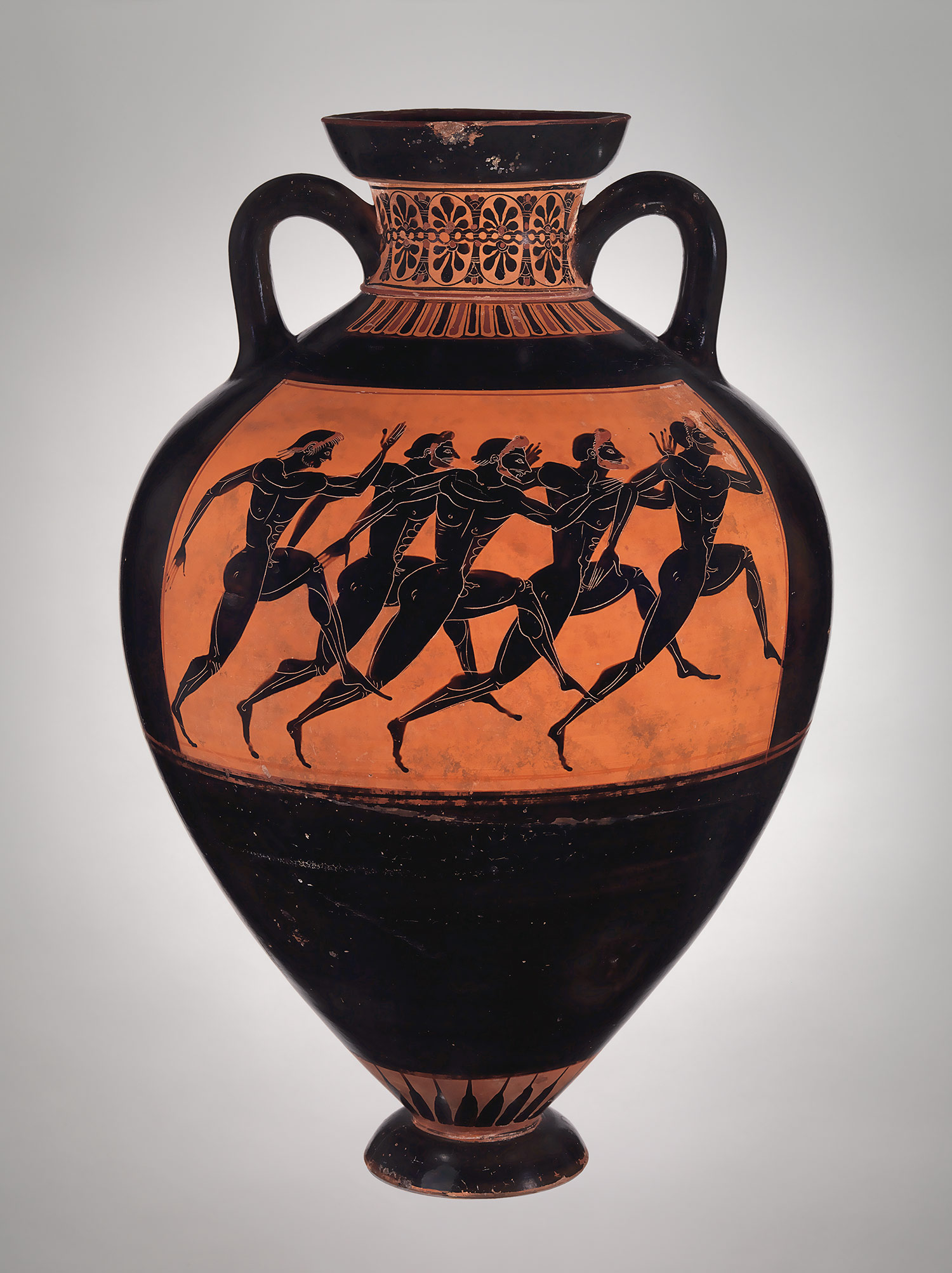
New Olympic Sport:
Synchronized Running
(This post has nothing to do with Euclid (YU-KLID), minus the fact that he is Greek. I just miss good 80s music.)

I had an exam today in one of my Greek philosophy courses. All procrastination and laughably small amounts of sleep aside, I felt pretty good about it. After being reacquainted to how a pencil actually functions, I wrote my thoughts on the old Thucydical ideal of eikos.

Eikos, loosely translated from Greek, is basically how many of the antiquity-era Greeks wrote. To use eikos was to write as it probably happened. The "probably" serves as more of a noun than anything else. It is how people function according to the "human condition."

I think the Greek philosophers were very familiar with the... well, the familiar. If one can predict how a human might react in any given situation, then it can be assumed that that person understands the human condition very well. You understand selfish tendencies. You understand the "dog-eat-dog" mentality of civilization.

I hate eikos. Some people can thrive in an atmosphere of sameness. But not me. I don't want to be definable by an eikos. Oh sure, there are some norms that must be fulfilled throughout life in order to be able to belong to a society. But I think the human condition sucks. It is broken, and there seems like no easy fix in sight. Why should we live in the predictable?

Surprise people! Don't let what others think of you define you. You define you. When you are Christ-like, you break the mold. By being a good listener, taking friends out, loving others, refusing to pass judgment on others, or even read a Bible in public, you shed the eikos that controls the lives of so many others. Do not be afraid of what others think of you. Know that you are unique. Know that you are loved. And finally, be mindful that so many others are living in this state of eikos. Show them that it is who they are, and not the labels that society heaps on them, that really matters.

It's all Greek to me... Well, it was Greek to the translator at least.
Troy

Monday, January 24, 2011

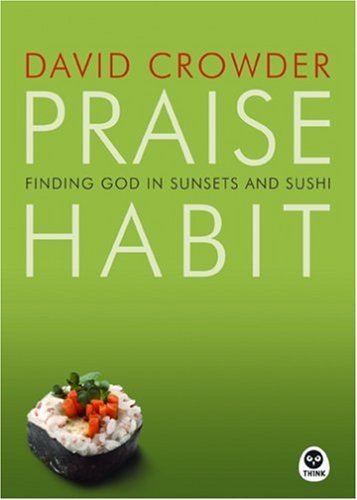
Finding God everywhere: "Praise Habit: Finding God in Sunsets and Sushi" by David Crowder

Nothing screams "Praise
God!" like raw fish
God is everywhere. He is in the mountains. He is in the trees. He is in your most trusted friends and most venomous of enemies. He is even in those little pre-wrapped sausages that you find at Wal-Mart. But how often do we actually see God in life?

Oh sure! He is apparent in the miracles. He is apparent in death. He is apparent in close calls. And sometimes even, He is apparent in church. Yeah, we like to find God in church. I liken it to charging your cell phone once a week... You can make it, but it's pretty dang difficult.

David Crowder is one of the foremost artists in the Christian music industry. His iconic hairstyle, reedy tenor, and melodically addicting tunes set him apart from most within any music industry, Christian or not. But what most people don't know is that he is also a writer. A really talented one, actually.

In his book Praise Habit: Finding God in Sunsets and Sushi, Crowder attempts to teach even the most raw and unpracticed of Christian hearts how to find God in everything. According to Crowder, people have lost the inherent ability to praise. As children, praise comes naturally. From acquiring new toys to seeing their daddy throw the perfect spiral, children just know that they are witnesses to the greatest thing on Earth. And they're thankful for it!

As we age we seem to lose this ability. Our care shifts not towards how awesome other people can be, but instead upon our own self-images, comfortable lifestyles, and personal pleasures. We become "I." With this change comes an inability to see beyond one's self. And Crowder hates that! He instead encourages each of us to find things to be thankful for. Once we run out of ideas to be thankful for, we continue to praise God just for life! It is in this constant joy and searching for God that we rediscover our own inherent "praise habit."

I encourage each of you to take this message to heart. Find God in everything. Find him in snow, or tea, or books, or video games, or stilt-walking, or music, or the habitual kindness of others. Learn to praise, and learn to be thankful in all things. There is more to praise than the rockin' worship tunes you sing on any given Sunday. Praise so much that it becomes habit. And then you will recognize God's voice in your life as the ultimate source of joy. "Praise is something we are, not something we do."

Sharing the reason we were created,
Troy

Sunday, January 23, 2011

Kicking it off: Music discovery days!

They love love love love
poppin' a wheelie!
Reading the blogs of other people, both friends and famous, is one of my favorite pastimes on the internet. Stimulating the mind is an important exercise, and sometimes it is important for us to look at the views/opinions of others so that we might form our own beliefs. So today, I'm going to kick off a new feature to the site!

Donald Miller is one of my favorite modern authors. Yes, I know many people like him, so I'm sorry to disappoint all of those hipsters out there informing me that I am much too mainstream (I still wear plaid from time to time... We can still be friends, right?). Every Sunday, Miller features music on his blog. His "Sunday Morning Music" vignettes support local musicians, famous musicians, and even a classical tubist! I think I'd kind of like to imitate Mr. Miller, and start sharing music with you on Sundays.

To celebrate the release of their new album Hi-Five Soup, today I would like to laud one of my favorite bands from my youth, The Aquabats! Originally a third-wave ska band in the 90s, the Bats! have changed their sound to incorporate ska guitar, Devo-esque synth work, and the catchiest melody lines on the planet. So today, I leave you with a taste of the MC Bat Commander and his band, The Aquabats!

Saturday, January 22, 2011

A myth regarding creativity

Sure, it looks nice. But so
did the Sirens in the Odyssey.
Excuses exist for every feasible reason on this planet. There is just something woven into the proverbial quilt of the human psyche that prevents us from failing without a second thought about it. We cannot be wrong. If we are wrong, we justify it in some way... Even when that justification is an enormous load of bovine excrement.

Some people have been asking me why I have not posted anything on the blog for nearly two weeks. I didn't even let creativity play in to my answer. I threw 'em the old standby of "writer's block." And that seemed to satisfy. Even I believed that my creativity was beyond some invisible barrier that I had yet to unlock in the past few weeks. For a time, I believed myself to be a struggling artist that molded his creative palette slowly, waiting for the right moment to spring some literary masterpiece (Yes, blogs can be regarded as masterpieces. If Victor Hugo had had a blog, he would have been big.) upon the world! If I knew very many angst-laden poets that still lived with their parents, I'm sure they would all be proud of me.

There is no such thing as writer's block. Trade secret I suppose. Two components make up the ridiculous false concept that is "writer's block." The first of these is the writer. Having a subject is rather important when trying to ascribe the "block." Otherwise, it would just be "block." The second component is laziness. Pure, unadulterated laziness.

Had I sat down, turned off my phone, and shut down Facebook for any decent amount of time over the last several weeks, I'm sure I would have written something. But alas, I am lazy! I did not ponder anything deep, nor did I attempt to grow in my relationships with the people who play roles in my life. Every thought and/or action in the life of Troy for the past two weeks can be tied back to these three statements:

1. Troy is comfortable.
2. Troy is easily distracted.
3. Troy is lazier than Billy Liar on any given Summer day.

The all-consuming behemoth of laziness is indeed a savage beast. It can creep up on us at any given time when we are not already preoccupied with any task that requires more than 2% of our brains. And nothing, I repeat, NOTHING else will steal your soul from doing the things that truly matter in this life as laziness will. Being constantly comfortable drags us right back into an apathetic lifestyle that drains us of meaning and instead fills us with "OKness" (totally trademarking that word).

To my few consistent readers out there, I apologize for the laziness. I promise that it will not happen again. Watch out for laziness in your own lives as well. While I believe myself to be King of the Lazies, I also know many others who struggle with the same issue. Go outside right now. Get coffee with someone you haven't seen for awhile. And for Pete's sake, do your homework!

Zzzzzzzzzzzzzzzz...
Troy

Monday, January 10, 2011

Rob Bell ruined my life!

I still don't understand this
cover, and I've read the
book 6 times!!!
My family and I first attended church when I was in the 2nd grade. It was the huge baptist church that had (and may still have) one of the largest influences in my quaint hometown of 6,000. Seriously, 600 people is a pretty large majority in a ranching town (For the record, average attendance was between 300-400, but holidays brought in up to 600). The funny thing is... I loved church! I could partake in mischief with friends, color tiny paper cutouts of famous Jewish heroes, craft little treasures that I still cannot find to this day, eat gratuitous amounts of candy, and school my "less educated" contemporaries in Bible trivia (I was a very arrogant child. I'm still pretty arrogant today, actually. Some things never change). The church became my home away from home, and I loved going! And when youth group came around? Ha! I was a man, by golly! A man who could go to concerts on his parents' money! How could it get any better!?! This was my equivalent to a church life for many years. The theology? Irrelevant to someone my age. The Bible? Easy-train to looking smarter than everybody else! So the church was the go-to place for fun and finding my own selfish worth. In all of my years there, Christ probably did in fact speak to me. I'm sure he did. But when you're eating snacks and going to amusement parks, who cares what Christ has to say?

Nothing lasts forever (scratch that, Twinkies last forever).  I was a freshman in high school during "the split." The church suffered a schism... Not over an extra-marital affair. Not over a crime. Not even over disagreement with a church doctrine. My church split over a call to reach out to the community. And, even more ridiculously, a single book wrecked what was left after that call... Something so trivial as a book destroyed the decades-long relationships within my church. That book was Velvet Elvis, by Rob Bell. So let the record show: Rob Bell ruined my easy-going, comfortable life!

This book is a difficult read for one reason: Bell dares his readers to ask questions. His theology is ambiguous and is not really given clarity at most points. The writing is very simple, which isn't really a bad thing I suppose. Just too seemingly simple for a difficult topic, the claim that he is trying to "repaint the Christian faith." And the organization is pretty scattered. I do not claim to agree with much of what Rob Bell says, whether in this book or others, but I do like his tendency to make a person ask questions.

Questions are how we grow. So often, unfortunately, we are taught to not question within the church. The view of pastors as having perfect knowledge of the Bible is far too prevalent within the faith. Trust me, I know! I grew up in that! But there comes a time when one must read for oneself. There comes a time when one must ask questions of oneself. And finally, there comes a point when one must choose what they believe and know why they believe it!

I guess this post is just a ridiculously roundabout way of conveying this: question things! We grow in questioning. It is in the process of searching for answers that we become the humans that we are meant to be. Don't believe the myth that somebody on this Earth has all of the answers for you. Nobody does. Trust, pray, and ask questions instead. Our God is a big god... He can handle your inquiries. Also, read Velvet Elvis sometime. While I may not agree 100% with what Bell has to say, he has a heart for people. How can I frown upon that?

Maybe Troy, maybe not... Nope, still just
Troy